STG

Start typing to search across every section of the site.

Loading…
Private Equity

Your IT Team Was Built to Run the Business, Not Integrate Five Acquisitions

November 20, 202610 min read
Your IT Team Was Built to Run the Business, Not Integrate Five Acquisitions

Why growing private equity-backed platforms need to rethink technology capacity before integration demands put operations and investment returns at risk.

Your acquisition strategy is moving forward.

You’ve added businesses, expanded your market presence, and created opportunities for operational improvements.

But your internal IT team is struggling to keep up.

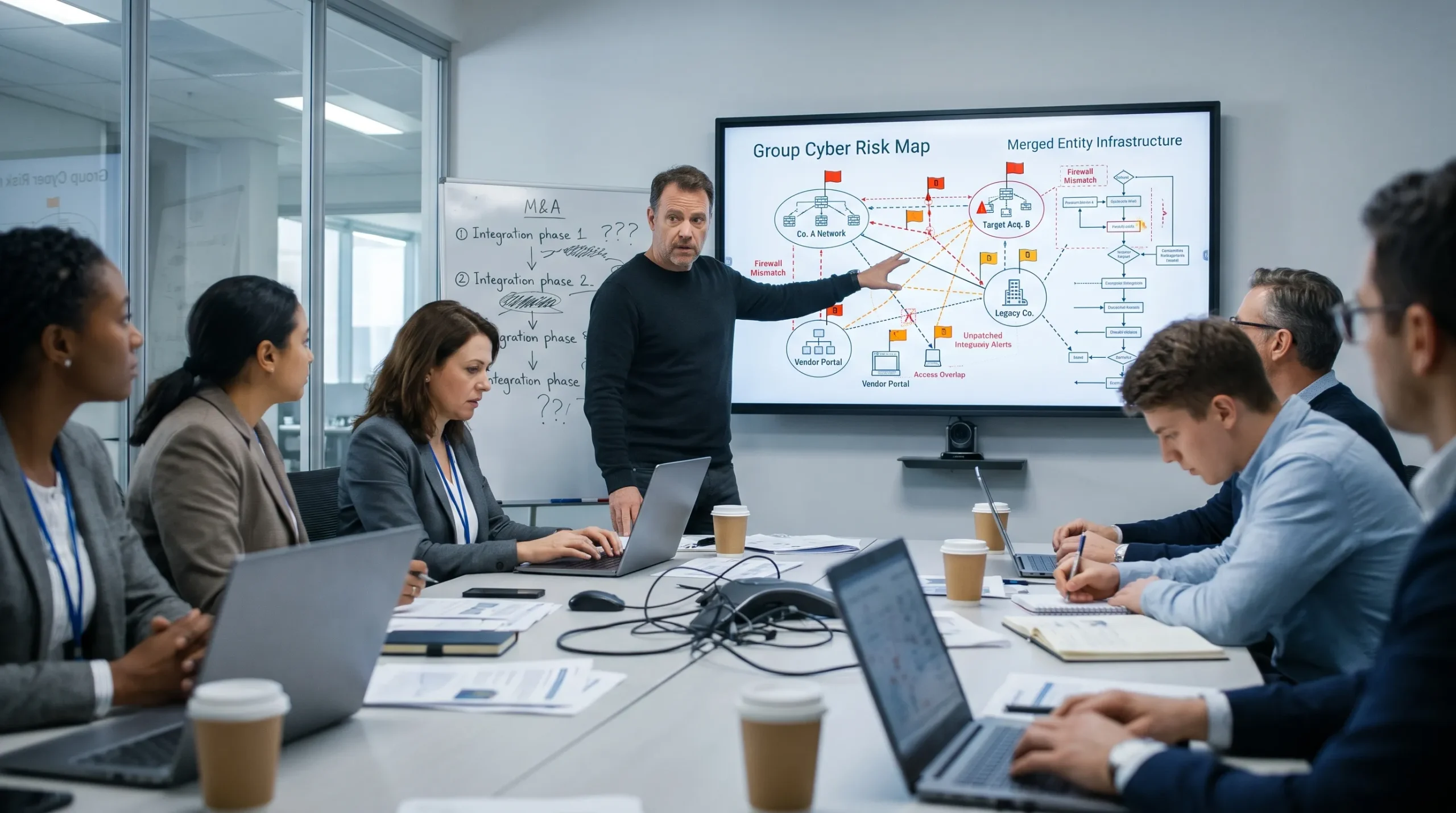
The same people responsible for supporting employees, maintaining systems, resolving technical issues, and protecting daily operations are now expected to integrate newly acquired businesses.

They’re managing different applications, networks, vendors, security requirements, and infrastructure environments.

And before one integration is complete, another acquisition arrives.

Your team may be working harder than ever. Yet integration projects keep slipping, technology problems take longer to resolve, and business leaders are growing frustrated.

The problem may not be your IT team’s performance. It may be that your acquisition strategy has created more technology work than your organization is equipped to deliver.

For private equity firms pursuing a buy-and-build strategy, this isn’t simply an IT staffing concern.

It’s a business capacity problem that can affect operational stability, integration timelines, costs, and the ability to realize the value expected from acquisitions.

The question isn’t whether your IT team can work harder.

It’s whether you’ve given the organization the capacity and direction required to support the business you’re building.

Running the Business and Integrating Acquisitions Are Different Jobs

Most internal IT teams are structured around the needs of the business they support.

Their responsibilities typically include maintaining infrastructure, supporting employees, managing applications, resolving technical issues, coordinating vendors, and protecting critical systems.

These activities keep the business operating.

Acquisition integration introduces a different category of work.

Each new business brings technology that must be evaluated, connected, consolidated, secured, supported, or eventually replaced.

The integration effort may involve:

  • Establishing access to critical systems and information.
  • Evaluating networks, infrastructure, and cybersecurity controls.
  • Connecting financial and operational reporting.
  • Integrating business applications and data.
  • Consolidating vendors and software contracts.
  • Supporting employees through technology changes.
  • Planning future systems standardization.

These initiatives require dedicated planning, coordination, technical expertise, and execution.

Some also involve decisions that extend beyond the IT department.

For example, consolidating financial systems requires agreement on business processes, reporting requirements, and organizational priorities.

Integrating customer information may involve sales leadership, operations, data quality, and privacy considerations.

Acquisition integration is a business initiative with significant technology requirements. It shouldn’t be treated as additional work the IT team can absorb indefinitely.

What Happens When Integration Work Exceeds IT Capacity?

The consequences don’t always appear immediately.

At first, the team may compensate by working longer hours, delaying lower-priority tasks, or relying more heavily on external vendors.

But as acquisitions accumulate, the effects can spread across the business.

1. Integration Timelines Begin to Slip

When daily operational issues compete with integration projects, urgent support needs often take priority.

That’s understandable.

A critical system outage may require immediate attention, while an integration milestone can appear easier to postpone.

But repeated delays can affect expected cost reductions, reporting improvements, and other operational benefits tied to the acquisition.

If the value creation plan depends on integrating systems within a particular timeframe, those delays become a business concern.

2. Routine Technology Problems Take Longer to Resolve

The pressure also works in the opposite direction.

When IT employees spend more time on acquisition integration, they have less capacity to support the existing business.

Help desk requests may take longer to resolve. System maintenance may be postponed. Employees may struggle to get timely assistance.

Over time, these issues can affect productivity and business confidence in the technology function.

Leadership may see declining service levels without recognizing that the team’s responsibilities have expanded substantially.

3. Cybersecurity and Maintenance Work Can Be Deferred

Cybersecurity, system updates, backups, and infrastructure maintenance require consistent attention.

When teams are overwhelmed, work that doesn’t appear immediately urgent may be delayed.

That can create additional exposure, particularly when acquisitions introduce unfamiliar systems and inconsistent security practices.

The concern isn’t that an overextended team will necessarily experience a security incident.

It’s that limited capacity can make it harder to identify and address important risks consistently.

4. Technology Costs Can Increase Without Better Results

When internal teams lack capacity, organizations may turn to outside vendors to complete individual projects or resolve urgent issues.

External support can be valuable.

But without coordinated priorities and oversight, the platform may accumulate overlapping vendor relationships, inconsistent approaches, and additional costs.

Leadership may spend more on technology without seeing corresponding improvements in integration progress or operational performance.

5. Key Employees Become Single Points of Failure

In lean IT organizations, critical knowledge often resides with a small number of people.

Those employees may understand the legacy systems, vendor relationships, custom applications, and operational dependencies that keep the business running.

As their responsibilities expand, the organization becomes increasingly dependent on their availability.

If a key employee leaves or becomes unavailable, important projects and daily operations may be affected.

The cost of insufficient IT capacity isn’t limited to delayed projects. It can show up in operational disruption, increased risk, and value creation initiatives that take longer to deliver.

Why Adding More People Isn’t Always the Answer

When technology work begins falling behind, the natural response may be to hire additional IT staff.

Sometimes that’s exactly what the business needs.

But hiring more people without understanding the underlying capacity problem can create additional expense without resolving it.

The first step is distinguishing among three different needs.

Operational Capacity

Does the organization have enough resources to support employees, maintain systems, manage infrastructure, and respond to daily business needs?

If routine support is consistently falling behind, additional operational capacity may be necessary.

That could involve internal staffing, external support, or changes to how services are delivered.

Integration Execution Capacity

Does the organization have the people and expertise required to complete acquisition integration projects?

Integration may require specialized skills in systems architecture, data migration, infrastructure, cybersecurity, project management, or business process changes.

Those skills may not be needed at the same level once the integration is complete.

Temporary or project-based expertise may be more appropriate than permanent hires for some of this work.

Strategic Technology Leadership

Does the organization have someone who can determine what should be integrated, in what order, and why?

This is a different requirement.

Even a well-staffed IT team can struggle if business priorities are unclear, integration decisions are delayed, or projects lack executive accountability.

The platform may need stronger strategic technology leadership before it needs more technical resources.

The right solution depends on whether the constraint is operational support, project execution, strategic direction, or a combination of the three.

Five Steps to Keep Acquisition Integration From Overwhelming Your IT Team

Leadership doesn’t need to wait for a major technology failure to address capacity constraints.

A practical approach starts with understanding the work, setting priorities, and matching resources to the outcomes the business needs.

1. Make the Full Technology Workload Visible

Start by identifying everything the IT organization is currently responsible for.

That includes daily operations, maintenance, cybersecurity, vendor management, planned improvements, and acquisition integration.

Then identify the work expected from upcoming acquisitions.

This exercise often reveals competing demands that aren’t visible in individual project plans.

What to do: Build a consolidated view of operational responsibilities, integration initiatives, deadlines, required skills, and available resources.

The goal is to understand the organization’s actual capacity before committing to additional work.

2. Separate Essential Operations From Integration Projects

Daily business operations and acquisition integration both matter, but they require different planning.

Some activities must continue without interruption. Others can be scheduled, sequenced, or assigned to dedicated project resources.

Without that distinction, urgent operational issues can repeatedly displace important integration work.

What to do: Identify the resources required to maintain critical operations and determine how much capacity remains for integration.

If the available capacity is insufficient, leadership needs to adjust resources, scope, or timelines.

3. Prioritize Integration Work Based on Business Impact

Not every system needs to be integrated immediately after an acquisition.

Some changes may be essential to financial reporting, cybersecurity, or operational continuity.

Others may offer limited near-term business value.

Attempting to complete everything at once can create unnecessary pressure on the IT team and the broader organization.

What to do: Rank integration initiatives according to their effect on growth, cost, risk, and the value creation plan.

Focus available resources on the work that matters most.

4. Use Specialized Support Where It Makes Business Sense

Some integration activities require expertise that the internal IT team doesn’t possess or cannot dedicate sufficient time to provide.

That doesn’t automatically justify a permanent hire.

External specialists may be appropriate for defined projects, temporary capacity needs, or work requiring particular technical skills.

The key is maintaining clear accountability and ensuring outside resources operate within a coordinated plan.

What to do: Identify which integration activities should remain with the internal team, which require specialized expertise, and which could be supported externally.

Use those decisions to build a resource plan that reflects the actual work.

5. Establish a Repeatable Integration Model

If the platform plans to continue acquiring businesses, integration cannot depend on improvisation after every closing.

Leadership needs a consistent approach to assessing acquired technology, identifying risks, establishing priorities, and assigning responsibilities.

That doesn’t mean every acquisition will follow an identical integration plan.

It means the organization should have a repeatable decision-making process.

What to do: Define standard integration assessments, planning milestones, ownership requirements, and escalation procedures that can be adapted to each acquisition.

This reduces uncertainty and makes it easier to plan resources as the platform grows.

How to Know When IT Capacity Has Become an Executive Issue

Not every busy IT department represents a strategic problem.

Technology teams routinely balance competing demands.

The concern is when the workload begins interfering with outcomes that matter to the business.

Leadership should pay attention when:

  • Acquisition integration projects repeatedly miss milestones because resources are unavailable.
  • Critical maintenance or cybersecurity work is postponed to accommodate new projects.
  • Routine technology support is deteriorating as integration responsibilities increase.
  • The same employees are assigned to multiple high-priority initiatives without realistic capacity planning.
  • External technology spending is increasing without clear accountability or measurable progress.
  • New acquisitions are being planned before the organization has a credible approach to integrating those already completed.

These are signals that the business may need to reconsider how technology work is organized and resourced.

The decision shouldn’t be left entirely to the IT manager.

If integration delays affect the investment thesis, leadership needs to be involved in resolving the capacity problem.

The Right Capacity Plan Starts With the Acquisition Strategy

Technology staffing decisions are often made in response to immediate operational demands.

A growing private equity-backed platform needs a broader perspective.

The organization should understand how its acquisition plans will change technology requirements over time.

For example, a platform expecting additional acquisitions may need ongoing integration leadership and repeatable execution capabilities.

A business nearing the end of an acquisition phase may need temporary expertise to complete outstanding integration work before returning to a steadier operating model.

Another organization may need to strengthen its internal IT leadership before adding execution resources.

There isn’t one staffing model that fits every platform.

The right approach depends on the acquisition strategy, technology environment, integration backlog, and business outcomes leadership is trying to achieve.

The objective isn’t to build the largest possible IT team. It’s to create the capacity required to execute the strategy without putting the existing business at risk.

How STG Helps Align Technology Capacity With Business Priorities

STG Consulting is a business technology consulting firm that helps leaders understand how technology affects growth, cost, and risk.

Through the STG Strategic Technology Framework®, we help organizations assess their technology environment, clarify priorities, and align technology decisions with business objectives.

For private equity-backed platforms, that perspective can help leadership distinguish between strategic, operational, and execution challenges, identify where additional support may be needed, and establish a practical path forward.

We bring expertise to accelerate progress, wherever you are in the journey.

The goal isn’t simply to add more technology resources.

It’s to help leadership determine what needs to happen, what capabilities are required, and how to move forward without creating unnecessary cost or complexity.

Is Your IT Team Equipped for the Acquisition Strategy Ahead?

Your IT team may be doing an excellent job supporting the business it was originally built to serve.

But as acquisitions accumulate, the demands placed on that team can change dramatically.

If integration projects are falling behind, technology costs are increasing, or daily operations are beginning to suffer, the answer may not be asking your team to do more.

It may be time to rethink how the work is prioritized, led, and resourced.

Talk to an Advisor

Schedule 30 minutes with an STG advisor to discuss the technology capacity challenges affecting your platform, where integration demands may be creating operational or financial risk, and what options could help.

We’ll help you think through whether the primary constraint is strategic leadership, execution capacity, or ongoing operational support - and which decisions deserve attention first.

Your acquisition strategy should determine the technology capabilities you need, not the other way around.

See exactly where your technology stands

Five minutes today can reshape your next budget cycle. Get your technology score, benchmarked against what high-performing organizations actually do.

Share this article