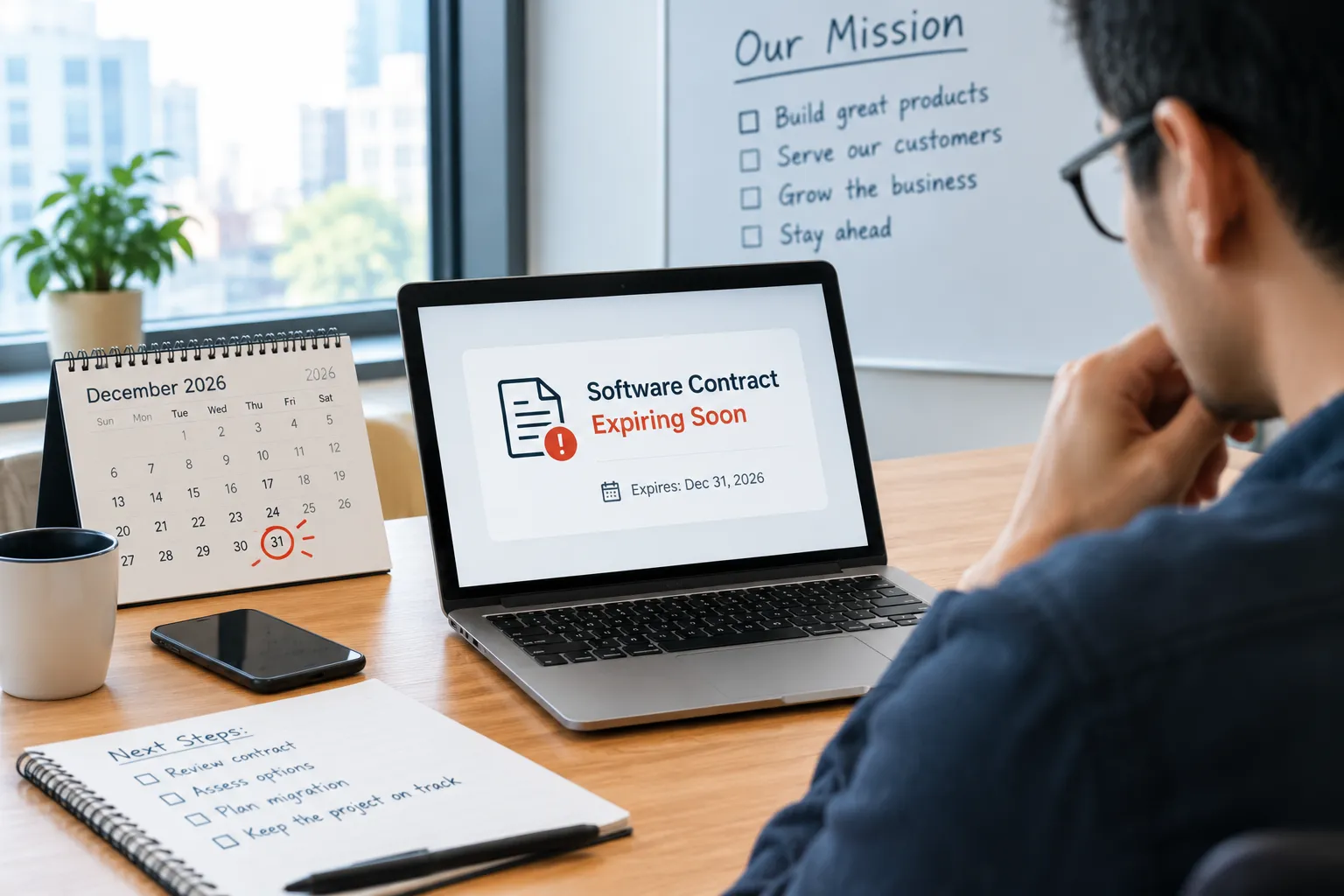

Why mid-market technology leaders need to rethink how they scale software delivery capacity.
Your product roadmap is slipping. Critical engineering positions remain unfilled. Your best developers are spending more time managing workloads, onboarding contractors, and addressing technical debt than building what the business needs next.
Meanwhile, leadership expects faster releases, greater AI adoption, and predictable delivery costs.
The obvious answer is to hire more engineers.
But what if headcount isn’t the real problem?
For CTOs and engineering leaders at growing technology companies, the challenge isn’t simply finding qualified developers. It’s increasing productive engineering capacity without introducing more complexity, cost, and delivery risk.
The question isn’t how quickly you can add developers. It’s how quickly those developers can help your business deliver meaningful results.
The Hidden Business Cost of Engineering Capacity Gaps
When an engineering position stays open, the cost extends well beyond recruiting.
Product releases move further into the future. Customer commitments become harder to meet. Senior engineers absorb additional responsibilities, often at the expense of higher-value development work.
Eventually, the consequences reach beyond engineering.
A delayed product feature can postpone revenue. A missed release can weaken customer confidence. An overextended engineering team can introduce quality and security risks that create even more work later.
For mid-market technology companies, these challenges can become particularly difficult during periods of rapid growth.
Unlike larger enterprises, many mid-market organizations don’t have extensive engineering capacity available to absorb sudden changes in demand. Yet they face many of the same expectations for speed, reliability, and innovation.
Every month spent waiting for the right engineering capacity is another month your business may be falling behind its own growth objectives.
The solution requires looking beyond open requisitions and examining what’s actually preventing the organization from delivering.
Why Traditional Staff Augmentation Often Falls Short
Traditional technology staffing solves an important problem: connecting companies with available talent.
But availability and productivity aren’t the same thing.
An engineer may have the right technical qualifications and still require substantial time to understand your architecture, development standards, business priorities, and delivery processes.
When external resources arrive without sufficient technical oversight or a clear integration plan, existing engineering leaders often inherit additional responsibilities.
They must review code, explain requirements, resolve communication gaps, and manage performance.
Instead of creating capacity, the organization may simply redistribute its existing workload.
This is where the economics of traditional staffing can become misleading.
A lower hourly rate doesn’t necessarily produce a lower cost of delivery. If additional management, rework, and delayed releases offset the initial savings, the business may end up paying more for less progress.
The better measure of engineering investment isn’t the cost per developer. It’s the cost of delivering reliable, production-ready software.
That distinction changes how technology leaders should evaluate external engineering partners.
AI-Ready Engineering Teams: More Than Developers Who Know AI Tools
Artificial intelligence is changing how software teams approach development, testing, documentation, and code analysis.
But simply hiring developers who use AI coding assistants doesn’t guarantee better engineering outcomes.
AI-generated code still requires sound architectural judgment, security review, testing, and accountability.
Without appropriate controls, faster code generation can create additional technical debt rather than reduce it.
For technology leaders, an AI-ready engineering workforce should demonstrate three essential characteristics:
1. Practical AI proficiency
Engineers understand where AI-assisted development can improve productivity and where human judgment remains essential. They can use approved tools while respecting organizational requirements for code quality, security, and intellectual property.
2. Alignment with existing engineering practices
External engineers work within established architecture, development workflows, testing standards, and release processes. Their contributions strengthen the existing environment rather than create disconnected work.
3. Accountability for delivery outcomes
Progress is evaluated through completed, accepted work, quality, and predictable delivery rather than hours billed or the number of resources assigned.
AI readiness is valuable when it helps teams produce better software with greater consistency.
It isn’t a substitute for experienced engineers, disciplined execution, or clear business priorities.
A Different Approach: Co-Managed Engineering Pods
What if expanding your engineering capacity didn’t require your internal leaders to manage every additional developer?
That’s the thinking behind co-managed engineering pods.
Rather than supplying individual contractors and leaving the client to coordinate their work, a co-managed model combines qualified engineering talent with defined delivery responsibilities and technical oversight.
The client retains ownership of product direction, priorities, architecture decisions, and acceptance criteria. The engineering partner helps coordinate execution, maintain standards, and identify obstacles before they disrupt delivery.
The objective isn’t to replace your internal team.
It’s to extend its capacity while protecting the time and attention of the people already responsible for your product.
For example, a company facing a critical application backlog might add a small engineering pod to address a defined set of development priorities.
Instead of assigning several independent contractors to an already overextended engineering manager, the organization establishes a shared delivery plan, clear responsibilities, and consistent progress reviews.
This creates an opportunity to expand capacity without proportionally expanding the internal management burden.
But the model only works when accountability is explicit.
Before engaging a co-managed engineering team, leaders should understand who owns technical decisions, how work is prioritized, how quality is measured, and what happens when delivery falls behind.
A co-managed pod should reduce operational friction, not introduce another layer of it.
Five Questions CTOs Should Ask Before Adding Engineering Capacity
Before approving another staffing contract or extending an open hiring search, engineering leaders should evaluate the actual constraint on delivery.
1. Where is engineering capacity creating the greatest business risk?
Not every delayed task carries the same consequence.
Identify which product milestones, customer commitments, or modernization initiatives have the greatest impact on revenue, operating cost, or business risk.
Prioritize capacity around those outcomes rather than simply filling the oldest requisitions.
2. How long does it take a new engineer to become productive?
Measure the time between engagement and the first meaningful, accepted engineering contribution.
Include onboarding, environment setup, architecture familiarization, code review, and testing.
This provides a more useful picture of hiring effectiveness than time-to-fill alone.
3. How much internal management time does external talent consume?
Consider how much time engineering managers and senior developers spend supporting contractors.
If external resources require substantial supervision, their actual contribution may be smaller than their billed capacity suggests.
4. Are we buying engineering hours or delivery progress?
Compare vendors using more than hourly rates and résumé qualifications.
Evaluate technical screening, integration practices, quality expectations, delivery oversight, and accountability.
The right partner should help you understand how additional capacity will translate into measurable progress.
5. Can we scale capacity without creating long-term dependency?
External engineering support should strengthen your organization, not make it increasingly dependent on a vendor.
Establish expectations for documentation, knowledge transfer, code ownership, security, and the ability to adjust team size as business priorities change.
These questions help leaders make a more informed decision about whether to hire, augment, or adopt a co-managed delivery model.
How STG Helps Technology Leaders Move From Capacity Gaps to Delivery Progress
At STG Consulting, a business technology consulting firm, we believe engineering capacity decisions should begin with business priorities, not résumés.
When software delivery slows, the first step is understanding what’s causing the constraint.
Is the challenge a shortage of specialized skills? An overloaded internal team? Unclear delivery ownership? Legacy architecture? Or a combination of these factors?
The answer determines whether additional engineers will accelerate progress or simply add cost.
STG brings together technology talent expertise, custom software engineering experience, and technical delivery oversight to help organizations make better engineering capacity decisions.
For companies that need additional execution capacity, STG’s AI-ready integrated workforce approach can combine qualified engineering professionals with a co-managed delivery structure aligned to the client’s priorities and standards.
The goal is straightforward: help your team move critical software initiatives forward while maintaining appropriate oversight, quality, and cost accountability.
And when the underlying problem is broader than staffing, the discussion should address the delivery model itself.
Because hiring more developers only creates value when the organization can turn that capacity into progress.
Your Next Engineering Investment Should Improve Delivery, Not Just Headcount
When a critical product deadline approaches, the pressure to add engineers can be intense.
But moving quickly on the wrong staffing model may create more work for the team you’re trying to support.
Before making your next engineering investment, determine what needs to change to improve delivery performance.
You may need specialized talent. You may need stronger technical oversight. You may need a different way to organize and manage engineering work.
The right answer starts with understanding the business outcome at risk.
STG helps technology leaders connect engineering investment to the outcomes that matter: faster progress, better cost control, and reduced delivery risk.
Get 30 minutes of executive perspective.
If your engineering roadmap is under pressure, let’s discuss where capacity is limiting progress, what your current delivery model may be costing you, and which options deserve consideration.
No generic staffing pitch. Just a practical conversation about your priorities and the decisions ahead.
Get 30 minutes of executive perspective.
Frequently Asked Questions
What is an AI-ready engineering pod?
An AI-ready engineering pod is a coordinated group of software engineers equipped to use appropriate AI-assisted development practices within established technical and security standards. Depending on the engagement, the team may also receive delivery oversight to support integration, accountability, and consistent progress against agreed priorities.
How is a co-managed engineering pod different from traditional staff augmentation?
Traditional staff augmentation typically provides individual engineers whom the client manages directly. A co-managed engineering pod adds a shared delivery structure, defined responsibilities, and technical oversight. The client retains control of business priorities and key technical decisions while the partner helps coordinate execution.
When should a CTO consider external engineering capacity?
External capacity may be appropriate when critical delivery milestones are at risk, specialized skills are unavailable internally, or existing engineers cannot absorb additional work without compromising quality. The decision should consider onboarding effort, management overhead, delivery accountability, and the cost of delaying important initiatives.
Can AI-ready engineers improve software delivery speed?
AI-assisted engineering tools can support activities such as code generation, testing, documentation, and analysis. Actual delivery improvements depend on developer experience, task suitability, code quality controls, and integration into existing workflows. Organizations should measure accepted work and quality outcomes rather than assuming that AI tool adoption automatically improves productivity.